Four decades of faces
My name is David Escobar. I’ve been drawing since I was ten years old. That’s when I drew my first portrait sitting in front of a picture of Ringo Starr. That first drawing set the course for everything since.
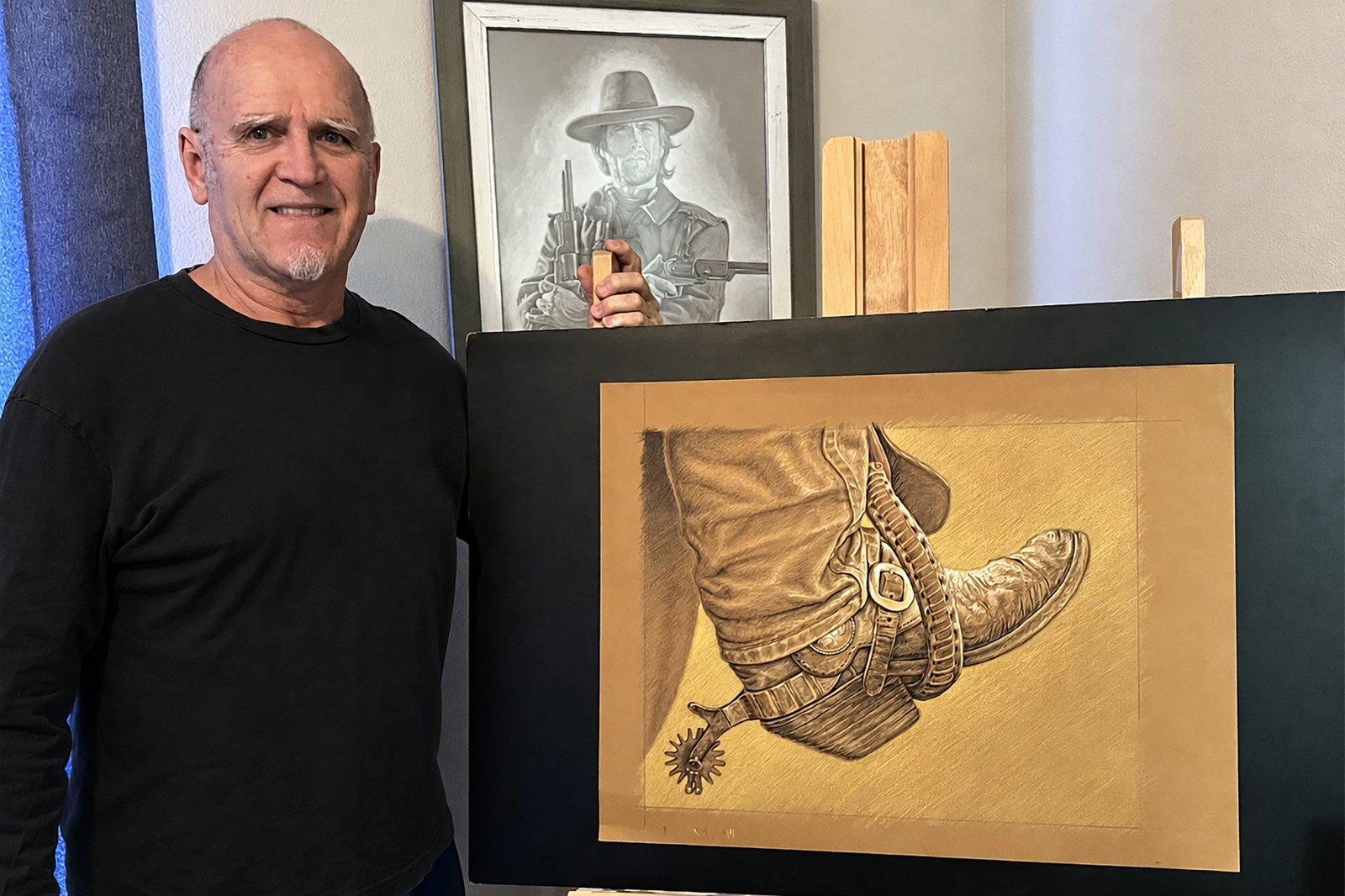
I’ve been doing it professionally since I was eighteen. That’s more than forty years of looking at faces and putting them down on paper and canvas — families, children, musicians, cowboys, and dogs.
I sign my work “Escobar.” It’s my hand on every piece, start to finish.
The Los Angeles years
From 1986 to 1990 I painted billboards for a sign company called Art & Sign Production, working out of a shop in the San Fernando Valley. The finished panels went up over Sunset Boulevard — record albums, soundtracks, faces six feet tall that had to read from a moving car.
That work will teach you things a classroom can’t: scale, speed, and how to hold a likeness when the brush is as wide as your hand. The full story has its own page.
Why so many musicians
Somewhere in the late 1980s I became a serious jazz listener, and it never wore off. That’s why so many of the faces in my portfolio belong to musicians — John Coltrane, Duke Ellington, Charlie Parker and Dizzy Gillespie side by side. I painted them because I was listening to them.
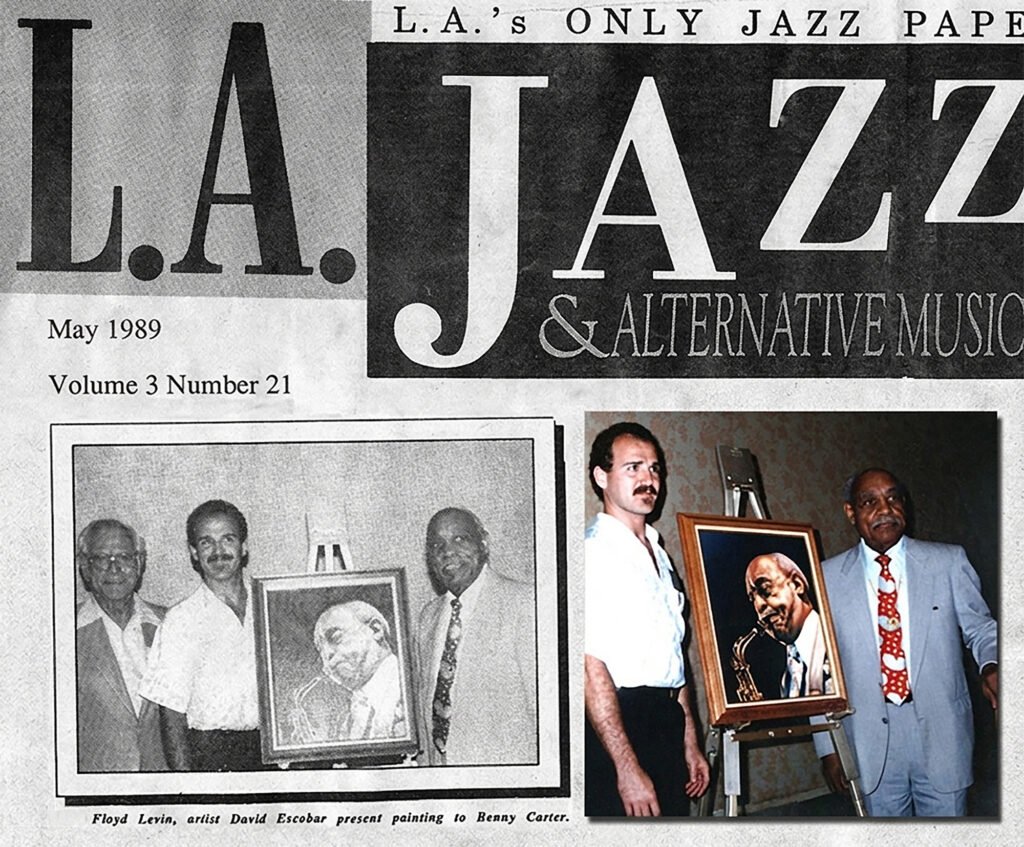
One of those portraits was of Benny Carter. In 1989 I got to hand it to him in person — the great alto saxophonist, holding a painting of his own face. The jazz writer Floyd Levin was there, and L.A. Jazz ran the photo.
How I work now
These days I work from my studio in Lexington, South Carolina, on commissioned portraits in oil and colored pencil. Every piece starts the same way — with your photographs and a conversation about who this person, or this animal, is to you.
Then it’s hours at the easel, over weeks. No printing, no shortcuts, no AI. The slow way is the only way I know, and it’s the reason the work looks the way it does.
Why portraits
A photograph shows what someone looked like for a fraction of a second. A portrait shows what it was like to know them. That difference is the whole job.
The pieces I’m proudest of hang in living rooms, not galleries — a father who’s gone now, a dog somebody still misses, a boy who grew up faster than anyone expected. That’s the work I want to do for you.